

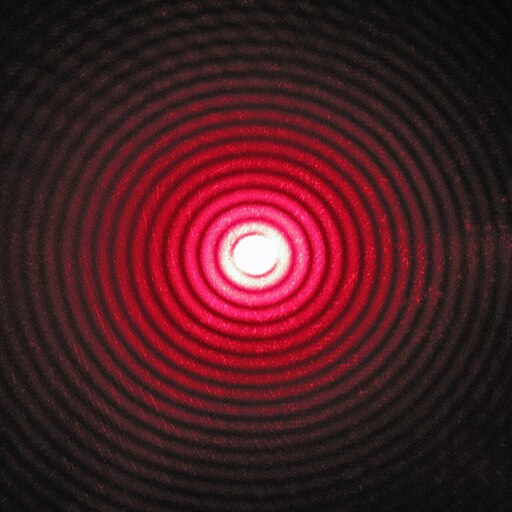
Diffraction is the deviation of waves from straight-line propagation due to an obstacle or through an aperture, without any change in their energy.
I am trying to read up on and understand diffraction. The example of a water wave under Occurrences was quite easy to understand, especially when contrasted with light waves (image below). However, aren’t the water waves losing - and thus changing - their energy as they hit the narrow entrance by losing momentum? As I said, I do understand that the waves diffract from straight lines into curved lines, but the concept of not changing energy is hard to grasp.

What would diffracted light waves look like if they did change their energy at diffraction?
Nonsense? To the contrary, this is the answer to OPs question “What would diffracted light waves look like if they did change their energy at diffraction?” The light waves would change frequency if they lost or gained energy as the amount of energy carried by a photon is directly proportional to it’s electromagnetic frequency and is inversely proportional to it’s wavelength. So, Photon plus or minus energy equals frequency and wavelength change. Sensible, no?
Nope. Photon energy and the energy of waves are different energies: connected, but not interchangeable.